
Does My Child Need Speech Therapy? 7 Signs Parents Should Know
7 Signs Parents Shouldn't Ignore

Many parents wonder whether their child's speech or language is developing the way it should. Some differences are simply part of a child's own pace, while others are worth a closer look from a professional.
This guide walks through common signs that may point to a speech or language delay, typical developmental milestones, and when it may help to schedule an evaluation. If you have concerns, Toddler Speech Delay Therapy and other pediatric services at Spectrum Speech Therapy can help determine what support your child needs.
Why Early Attention to Speech Matters
Speech and language skills build on one another. A toddler who struggles to produce sounds clearly may also have difficulty being understood by family members, teachers, or peers, which can affect confidence and social interaction.
Addressing concerns sooner rather than later gives a child more time to build skills during a period when the brain is especially receptive to learning language. It also gives parents a clearer picture of whether a delay is likely to resolve on its own or whether support would help.
An evaluation does not commit a family to anything long-term — it simply provides information. A speech-language pathologist can observe how a child communicates and compare those skills to typical developmental expectations.

7 Signs Your Child May Benefit From a Speech Evaluation
1. Limited Vocabulary for Their Age
A toddler who uses far fewer words than peers, or who doesn't seem to be adding new words regularly, may be showing an early sign of a language delay worth discussing with a professional.
2. Difficulty Being Understood by Familiar Listeners
Some unclear speech is expected in young children, but if even parents or caregivers frequently cannot understand what a child is trying to say, it may point to a speech sound disorder.
3. Not Combining Words Into Short Phrases
Children typically begin joining words together, such as "more juice" or "big dog," around certain ages. A child who continues to use only single words well past that point may need extra language support.
4. Trouble Following Simple Directions
If a child seems to struggle with understanding simple, age-appropriate instructions — not due to distraction, but because the language itself isn't clicking — it may signal a receptive language delay.
5. Stuttering or Disrupted Speech Flow
Occasional repetitions are common as young children learn to talk, but frequent blocks, prolonged sounds, or visible tension while speaking may be signs of a fluency disorder that a speech-language pathologist can assess.
6. Inconsistent or Unusual Sound Errors
A child who produces the same word differently each time, or who has significant difficulty planning and sequencing sounds, may need evaluation for something like Childhood Apraxia of Speech Therapy rather than a typical articulation delay.
7. Limited Social Communication or Interaction
Speech therapy isn't only about sounds and words — it also covers social communication, such as making eye contact, taking turns in conversation, and responding to others. A child who seems to struggle in these areas may benefit from a closer look.
Typical Speech & Language Milestones
Every child develops at their own pace, and these ranges are general guidance rather than strict rules. Still, widely accepted milestones can help parents notice when it may be worth asking a professional for input.
- Around 12 months: uses a few simple gestures and may say one or two words
- By about 18 months: has a small but growing vocabulary of single words
- By about 2 years: combines two words into short phrases and is understood some of the time by familiar listeners
- By about 3 years: uses short sentences and is usually understood by familiar listeners most of the time
- By about 4 years: tells simple stories and is generally understood by unfamiliar listeners
- By about 5 years: uses longer, more detailed sentences and follows multi-step directions
If your child is noticeably behind these general ranges, it does not necessarily mean something is wrong, but it is a reasonable reason to ask a speech-language pathologist for an evaluation.
What Happens During a Speech-Language Evaluation
An evaluation typically begins with a conversation about a child's developmental history, family concerns, and daily communication. The speech-language pathologist then observes and tests specific skills.
Depending on a child's age and concerns, this may include looking at sound production, vocabulary, sentence structure, understanding of language, and social communication. Play-based activities are often used with younger children to keep the process comfortable and natural.
Results are then compared to typical developmental expectations to determine whether therapy is recommended, and if so, what goals would be most useful to start with.
Common Speech & Language Concerns in Young Children
- Speech sound errors that persist past the age most children outgrow them
- Limited or slow-growing vocabulary
- Difficulty forming sentences or using correct grammar
- Stuttering or disrupted speech flow
- Trouble understanding spoken language or directions
- Challenges with social communication and conversation skills
Some children show just one of these patterns, while others show several together. Either way, a professional evaluation can clarify what's happening and what kind of support might help.
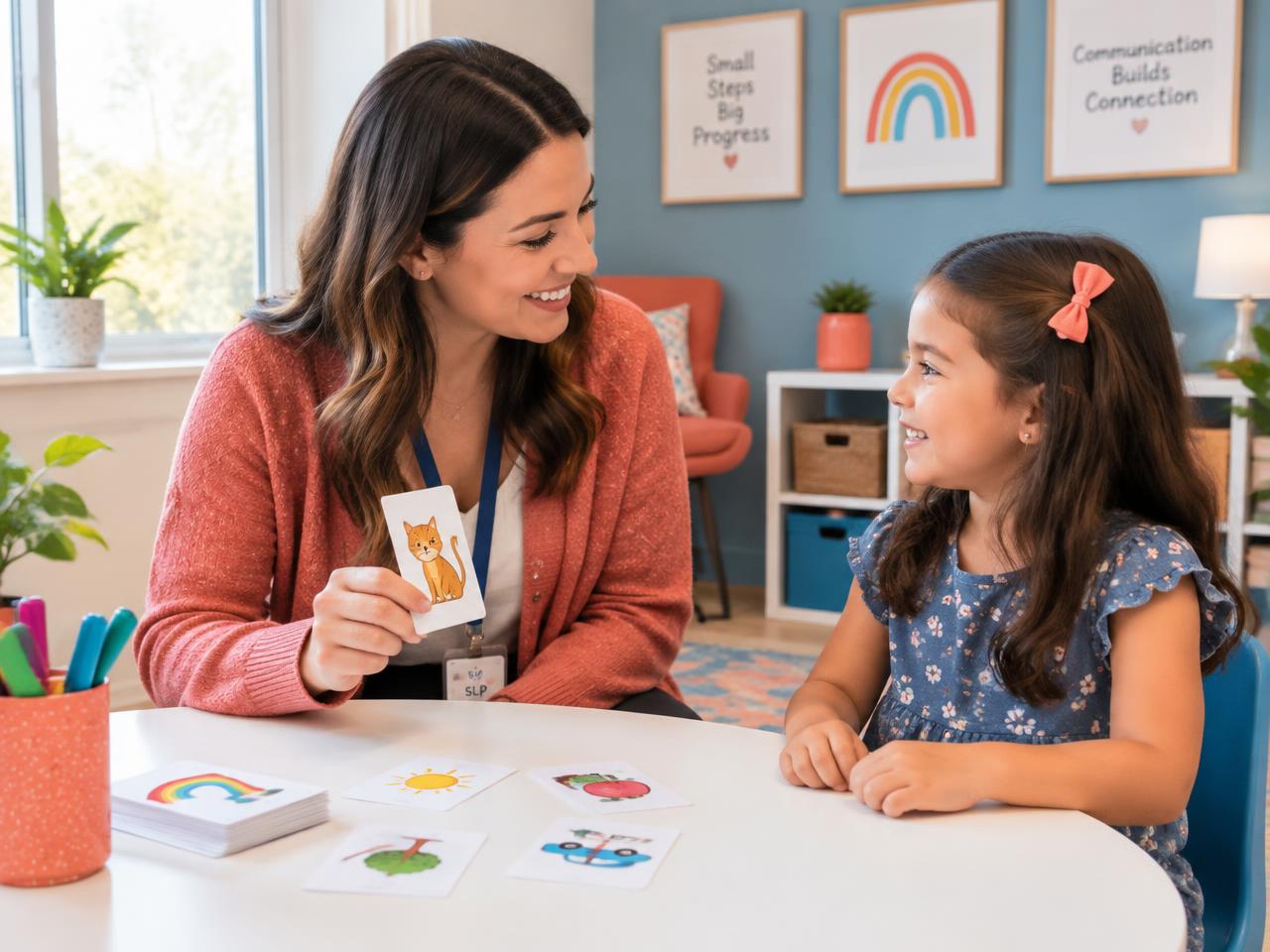
When to Seek a Speech Evaluation
Parents often wait to see if a child will "grow out of it." While many small differences do resolve naturally, it's reasonable to seek an evaluation if a concern has lasted several months, seems to be getting more noticeable rather than less, or is affecting how a child interacts with family, peers, or teachers.
Trusting parental instinct is valuable here — caregivers often notice subtle changes before anyone else does. An evaluation is a low-pressure way to get a clearer answer.
Frequently Asked Questions
At what age should I be concerned about speech delays?
Concerns can come up at any age, but many parents first notice differences around the toddler years when vocabulary and sentence use typically grow quickly. If your child seems noticeably behind typical milestones, it's reasonable to ask for an evaluation rather than wait.
Will my child just grow out of a speech delay?
Some children do catch up on their own, while others benefit from targeted support. An evaluation can help determine which situation applies rather than leaving it to guesswork.
What's the difference between a speech delay and a language delay?
Speech refers to how sounds and words are physically produced, while language refers to understanding and using words, sentences, and conversation. A child can have difficulty with one, both, or neither — an evaluation helps sort this out.
Is stuttering always a sign of a problem?
Not necessarily. Many young children go through a period of normal disfluency while learning language. Frequent, effortful, or lengthy disruptions, however, are worth discussing with a speech-language pathologist.
What is Childhood Apraxia of Speech?
It's a motor speech disorder in which a child has difficulty planning and coordinating the movements needed for speech, even though the muscles themselves work normally. Childhood Apraxia of Speech Therapy focuses on building those motor planning skills through repetition and practice.
How do I get started with an evaluation?
The first step is simply reaching out to a pediatric speech-language pathologist to discuss your concerns and schedule a screening or full evaluation.
Contact Spectrum Speech Therapy
If any of these signs sound familiar, it may help to speak with a speech-language pathologist about your child's development. Spectrum Speech Therapy, located at 2324 W Joppa Road Suite 130 in Lutherville, MD, offers both in-office and telehealth evaluations for families throughout Baltimore County.
Call 443-875-7606 to ask questions or schedule an evaluation for your child.
Explore Our Other Speech Therapy Services
Children's Speech Therapy
Play-based therapy for speech, language, social and feeding skills.
Learn moreToddler Speech Delay Therapy
Early help for late talkers and toddlers building first words.
Learn more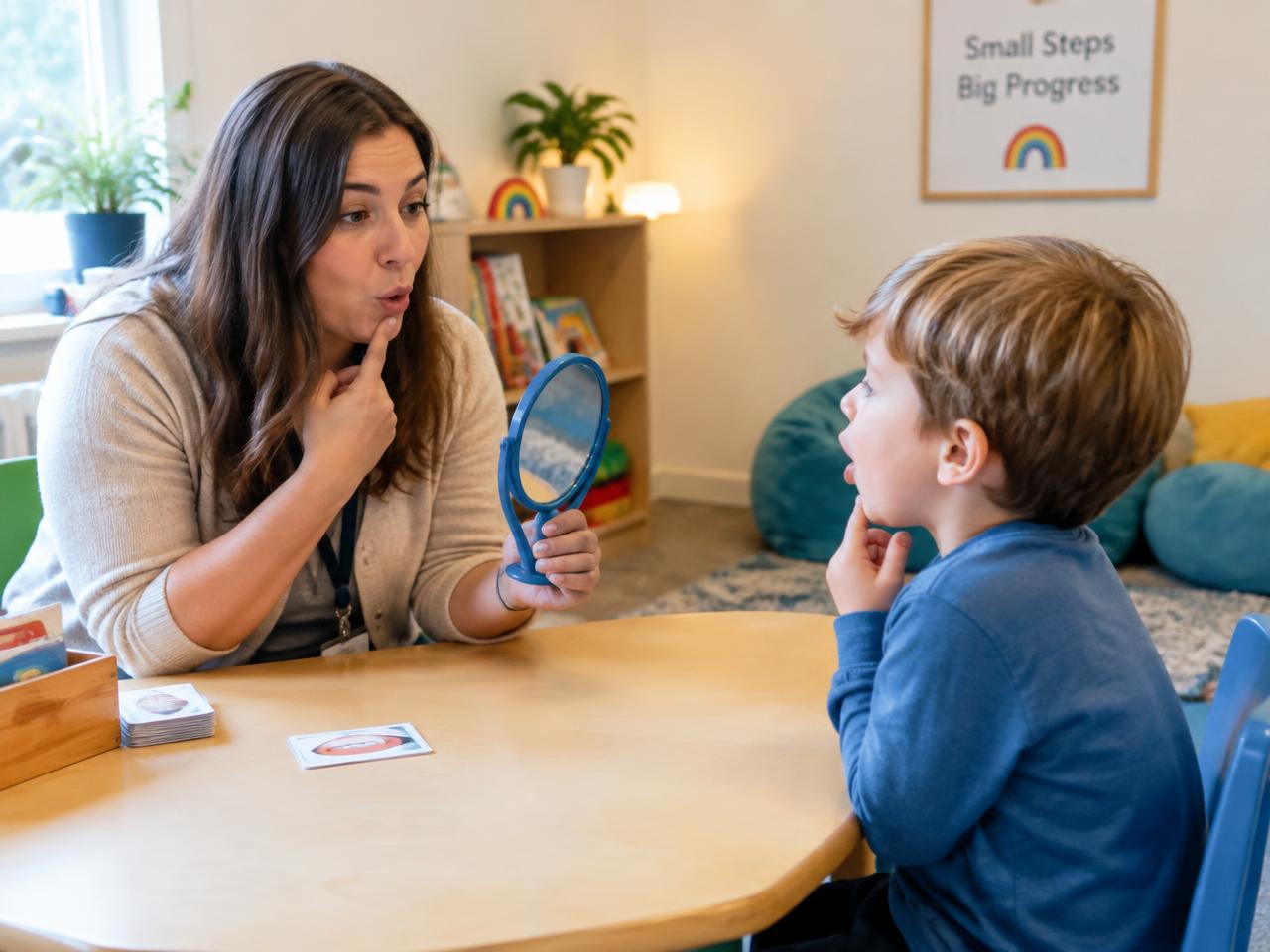
Childhood Apraxia of Speech Therapy
Motor-based practice for children who struggle to plan speech movements.
Learn more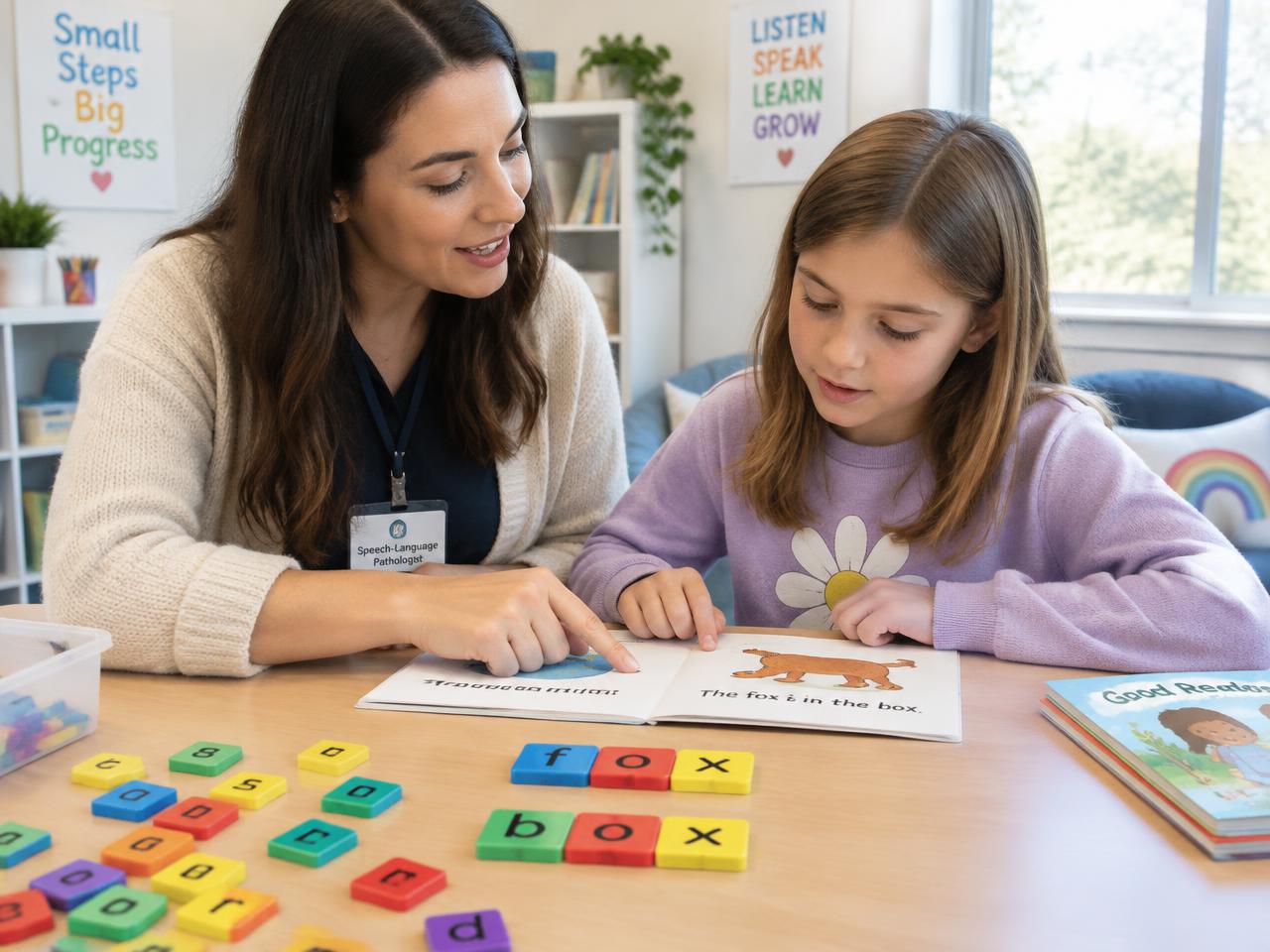
Dyslexia Therapy
Structured literacy support for early readers, preschool through 2nd grade.
Learn more
Adult Speech Therapy
Speech, language, voice, cognition and swallowing therapy for adults.
Learn more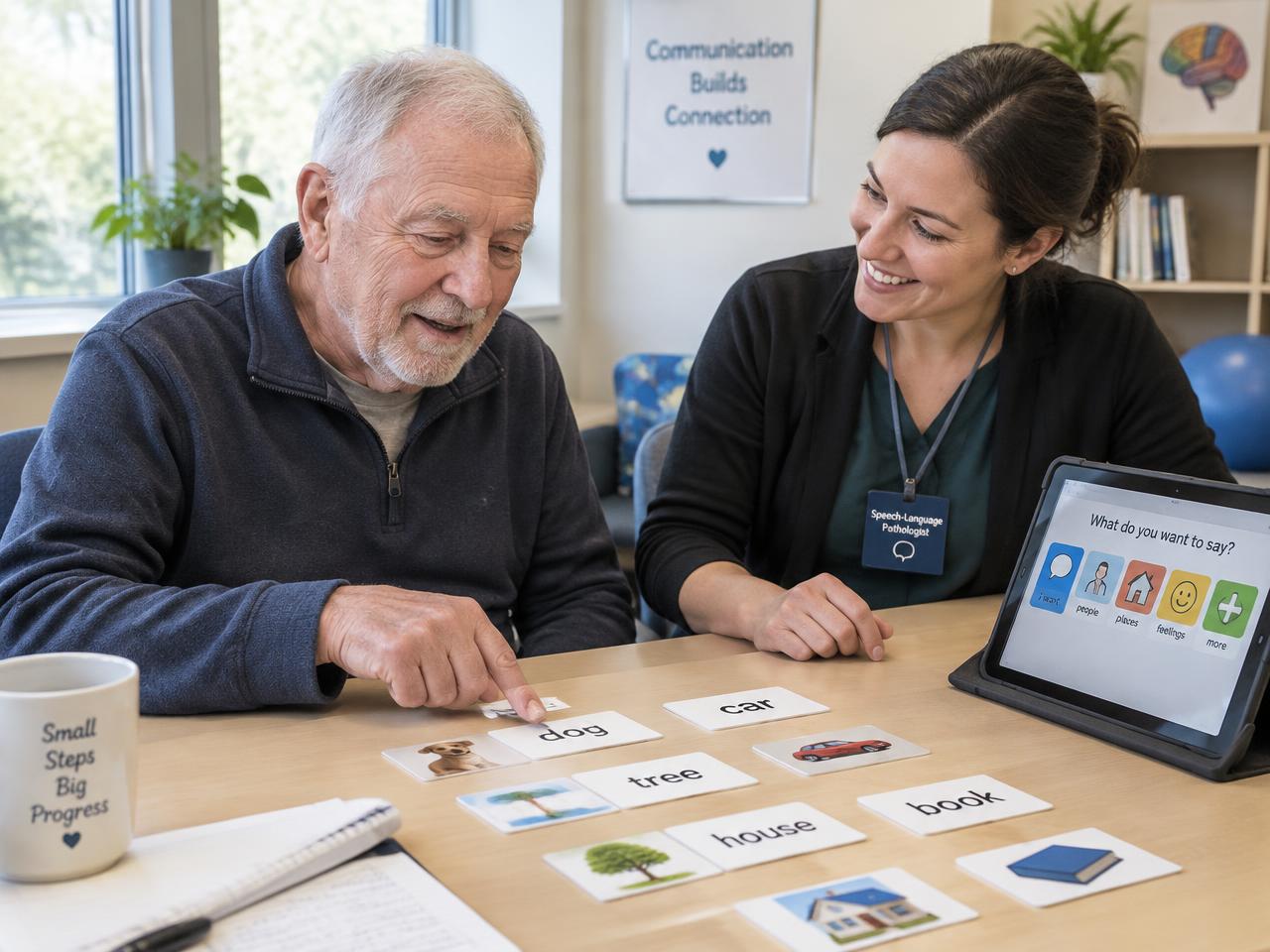
Speech Therapy After Stroke
Rehabilitation to rebuild communication and swallowing after a stroke.
Learn more
Aphasia Therapy
Help finding words, understanding and expressing language again.
Learn moreContact Us
Questions about an evaluation, scheduling, or insurance? Reach our Lutherville office by phone or send us a message.
Send a Message- 2324 W Joppa Road, Suite 130, Lutherville, MD 21093
- 443-875-7606
- amyschueler70@gmail.com
- Monday – Friday, 8:00 am – 6:00 pm