
Dyslexia Therapy in Lutherville, MD
Helping Young Students, Preschool Through 2nd Grade, Build Strong Reading Skills
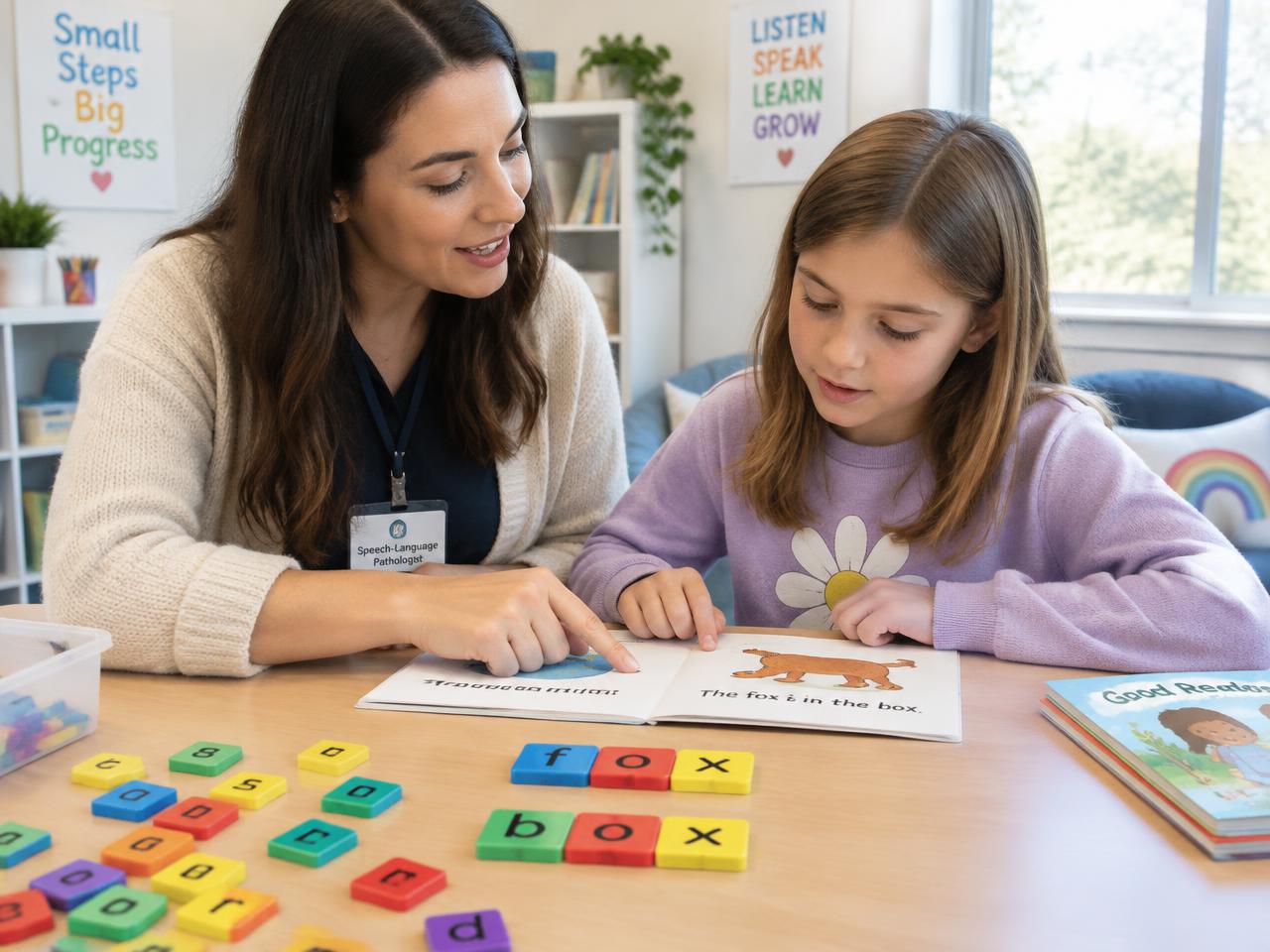
Dyslexia is a language-based learning difference that affects how a person connects sounds to letters. It is not a sign of low intelligence or a lack of effort. Many bright, curious young children with dyslexia work twice as hard as their peers just to read a page or spell a word correctly.
At Spectrum Speech Therapy, our speech-language pathologists help young students, from preschool through 2nd grade, strengthen the language skills that sit underneath reading and writing. We serve families from Lutherville, Timonium, Towson, Cockeysville, Hunt Valley and the surrounding Baltimore County area, both in our Greenspring Station office and through Maryland telehealth.
Because speech-language pathologists are trained in phonology, language structure and literacy, we are well suited to support readers who struggle with decoding, spelling, reading fluency and written expression. Our goal is to help each child read with more accuracy, confidence and independence.
What Is Dyslexia?
Dyslexia is a specific learning disability that is neurological in origin. It is usually characterized by difficulty with accurate or fluent word recognition and by poor spelling and decoding abilities. These challenges typically come from a weakness in the phonological component of language, meaning the ability to notice, remember and work with the individual sounds inside words.
Dyslexia is common. Researchers estimate that as many as one in five people show some signs of it. It often runs in families, and it lasts across the lifespan. The good news is that early, structured, explicit instruction in the first years of school can make a big difference in how a child learns to read.
Dyslexia can look different from one person to the next. Some readers struggle mostly with sounding out unfamiliar words. Others can decode slowly but read with so much effort that comprehension suffers. Many have strong verbal skills and big ideas but find it hard to get those ideas onto paper.

Signs Your Child May Benefit From Dyslexia Therapy
Early signs can appear long before a child is expected to read. You may want to consider an evaluation if your child:
- Has trouble learning letter names and the sounds that go with them
- Struggles to rhyme, clap syllables or blend sounds into words
- Guesses at words based on the first letter or the pictures
- Reads slowly and with a lot of effort, even on familiar text
- Spells the same word several different ways on one page
- Avoids reading aloud or becomes upset during homework
- Understands stories read aloud far better than stories they read alone
- Has a parent or sibling who also had reading difficulties
Early support matters. The preschool through 2nd grade years are when children build the sound and letter skills that all later reading depends on, so this is the ideal time to step in.
How Speech-Language Pathologists Help With Dyslexia
Reading is built on spoken language. A child needs to hear and manipulate sounds, understand vocabulary and sentence structure, and connect all of that to print. Speech-language pathologists work directly on these foundations, which is why speech therapy can be a valuable part of a dyslexia support plan.
Our therapists may address:
- Phonological awareness: hearing, blending, segmenting and manipulating sounds in words
- Phonics and decoding: linking sounds to letters and letter patterns in a systematic order
- Spelling and encoding: applying sound-symbol rules to write words accurately
- Reading fluency: building speed, accuracy and expression so reading becomes less tiring
- Vocabulary and morphology: understanding prefixes, suffixes and roots to decode longer words
- Reading comprehension: following stories, finding main ideas and making inferences
- Written expression: planning, organizing and writing sentences and paragraphs
Many children with dyslexia also have speech sound or language concerns. Treating these areas together can help therapy move faster and feel more connected for the child. You can learn more on our Children's Speech Therapy page.
Our Structured Literacy Approach
Research consistently shows that readers with dyslexia benefit most from structured literacy instruction. This approach is explicit, systematic and cumulative. Skills are taught directly, in a logical order, and each new skill builds on what the student has already mastered.
Sessions are multisensory whenever possible. A child might say a sound, trace the letter, build a word with tiles and then read it in a sentence. Using several senses at once helps new patterns stick. We also review regularly so that skills become automatic instead of something the child has to think hard about every time.
Just as important, we keep sessions encouraging. Many students arrive feeling discouraged about reading. We celebrate progress, use engaging materials and help each client see that their brain can learn to read well with the right kind of practice.
Dyslexia Evaluations and Treatment Planning
Every client begins with a thorough evaluation. We look at phonological awareness, decoding, spelling, reading fluency, comprehension, oral language and written expression. We also gather history from parents, teachers or the client themselves to understand when concerns began and how they affect daily life.
After the evaluation, we explain the results in plain language and create a treatment plan with clear, measurable goals. We can share findings with schools, tutors and other professionals with your permission, so everyone supporting the reader is working toward the same targets.
If a formal diagnosis or psychoeducational testing is needed, we can help guide families toward the right next step while therapy addresses the skills that need support now.
Working With Families and Schools
Progress happens fastest when practice continues outside the therapy room. We give families simple, short activities to use at home and explain the strategies we are using so parents feel confident supporting their child. When helpful, we collaborate with teachers and school teams on accommodations such as extra time, audiobooks or reduced copying.
Our Lutherville office at Greenspring Station is convenient for families from Towson, Timonium, Ruxton, Cockeysville and Hunt Valley. Maryland telehealth sessions are also available and work well for many literacy goals. See all of our Speech Therapy Services or visit Areas We Serve to learn more.
Why Families Choose Spectrum Speech Therapy
- Licensed, credentialed speech-language pathologists focused on early readers
- Individualized plans built on a detailed evaluation
- Structured, multisensory literacy instruction
- In-person sessions in Lutherville and telehealth across Maryland
- A warm, encouraging environment that builds confidence
If you are concerned about your child's reading or your own, we are here to help. Contact Spectrum Speech Therapy to schedule an evaluation or ask a question.
Frequently Asked Questions About Dyslexia Therapy
Can a speech-language pathologist help with dyslexia?
Yes. Speech-language pathologists are trained in phonology and language, which are the foundations of reading and spelling. For students up to 2nd grade, we work on phonological awareness, phonics, decoding, spelling, early fluency and comprehension.
What ages do you see for dyslexia therapy?
Our dyslexia therapy is for young students from preschool through 2nd grade. Signs can appear as early as preschool and kindergarten, and these early years are the best time to build reading foundations.
Do I need a dyslexia diagnosis before starting therapy?
No. If your child is struggling with reading or spelling, we can evaluate their skills and begin therapy. We can also help you decide whether further testing would be useful.
How often are dyslexia therapy sessions?
Most clients attend one or two sessions per week. Consistent, frequent practice helps reading skills become automatic. We will recommend a schedule based on the evaluation and your goals.
Do you offer dyslexia therapy by telehealth?
Yes. We offer telehealth sessions throughout Maryland, and many literacy activities translate well to a screen. In-person sessions are available at our Lutherville office.
How do I get started?
Call our office at 443-875-7606 or use our contact form. Our team will help you schedule an evaluation in Lutherville or by telehealth.
Explore Our Other Speech Therapy Services
Children's Speech Therapy
Play-based therapy for speech, language, social and feeding skills.
Learn more
Toddler Speech Delay Therapy
Early help for late talkers and toddlers building first words.
Learn more
Childhood Apraxia of Speech Therapy
Motor-based practice for children who struggle to plan speech movements.
Learn more
Adult Speech Therapy
Speech, language, voice, cognition and swallowing therapy for adults.
Learn more
Speech Therapy After Stroke
Rehabilitation to rebuild communication and swallowing after a stroke.
Learn more
Aphasia Therapy
Help finding words, understanding and expressing language again.
Learn moreContact Us
Questions about an evaluation, scheduling, or insurance? Reach our Lutherville office by phone or send us a message.
Send a Message- 2324 W Joppa Road, Suite 130, Lutherville, MD 21093
- 443-875-7606
- amyschueler70@gmail.com
- Monday – Friday, 8:00 am – 6:00 pm