
Adult Speech Therapy Near White Marsh, MD
Personalized Speech, Language, Cognitive, Voice & Swallowing Therapy for Adults

Changes in speech, memory, language, voice, or swallowing can make everyday activities much harder than they used to be. A person recovering from a stroke may struggle to find words during conversations; someone with a neurological condition may notice their speech has become softer or harder to understand; others may have trouble remembering information, following conversations, or safely eating and drinking.
Spectrum Speech Therapy provides adult speech therapy for White Marsh, MD residents experiencing communication, cognitive, voice, or swallowing challenges. Our licensed speech-language pathologists work with adults and seniors with needs related to stroke, brain injury, neurological conditions, cognitive changes, motor speech disorders, voice difficulties, and swallowing disorders.
Treatment is individualized around what matters most to each person — communicating more easily with family, participating in medical appointments, returning to work, or remaining as independent as possible. Learn more about our comprehensive Adult Speech Therapy services, or contact Spectrum Speech Therapy to discuss your needs.
Schedule an Adult Speech Therapy Evaluation443-875-7606
Adult Speech Therapy Can Address More Than Speech
Many people are surprised by how broad adult speech-language therapy can be. Speech-language pathologists work with communication, cognition, voice, and swallowing. Depending on the individual, treatment may address:
- Difficulty finding words or forming thoughts
- Slurred, unclear, or reduced-volume speech
- Problems understanding conversations, reading, or writing
- Memory changes, reduced attention, or trouble organizing tasks
- Voice weakness, hoarseness, or swallowing problems
- Communication changes following stroke, brain injury, or neurological conditions
Spectrum provides a range of speech and language therapy services for both adults and children. An evaluation helps determine which abilities are affected and what treatment may be most appropriate.

Speech Therapy After a Stroke Near White Marsh
Stroke is one of the most common reasons adults are referred to a speech-language pathologist. Depending on where the brain was injured, a person may develop aphasia, which affects language; dysarthria, which affects speech clarity; or apraxia of speech, which affects the ability to plan speech movements. Stroke can also affect memory, attention, reading, writing, problem-solving, organization, executive functioning, swallowing, and communication in social situations.
Recovery looks different for every person. An early goal may be communicating basic needs, while someone further along may want to have longer conversations, return to work, or communicate more effectively with healthcare providers, and speech therapy can be adapted as those goals change. Spectrum's adult speech therapy program includes treatment for adults recovering from stroke as well as those managing other neurological and medical conditions.
Aphasia and Cognitive-Communication Therapy
Aphasia is a language disorder that often follows a stroke or brain injury, affecting speaking, understanding, reading, and writing. A person may know exactly what they want to say but be unable to retrieve the right word, or may struggle primarily with understanding, reading, or forming complete sentences. Aphasia therapy may work on word retrieval, naming, sentence formation, conversation, reading comprehension, writing, and alternative ways to communicate when a word cannot be found, and can involve family members so communication partners learn how to give extra time and support more successful conversations at home.
Sometimes a person's speech sounds completely normal, but communication is still difficult because of cognitive-communication changes affecting memory, attention, organization, and executive functioning. These changes can occur after stroke, traumatic brain injury, concussion, or other neurological or medical events, and may show up as forgetting appointments, losing track of conversations, or becoming overwhelmed by complex tasks. Treatment often combines direct practice with practical strategies — smartphone reminders, calendars, checklists, and routines — so daily life becomes easier to manage. If you are unsure whether your symptoms may benefit from treatment, review Spectrum's frequently asked questions about speech therapy or contact the practice for an evaluation.
Speech, Voice & Swallowing Therapy
Neurological conditions can affect the muscles and movements used for speech, a condition called dysarthria, making speech slurred, slow, quiet, weak, or difficult to understand. Treatment may address speaking rate, articulation, breath support, and vocal volume, incorporated into real-life situations such as phone calls, meetings, or family conversations. Apraxia of speech is a related but different difficulty involving the brain's ability to plan speech movements, and may include inconsistent sound errors or difficulty starting words; because apraxia, aphasia, and dysarthria can occur together, an evaluation helps clarify which systems are involved. Learn more on our Speech Therapy Services page.
A weak, strained, hoarse, or easily fatigued voice can also affect everyday communication, whether from talking throughout the workday or trying to be heard in noisy environments. Voice therapy may address breathing, vocal efficiency, and strategies for reducing strain. Speech-language pathologists additionally evaluate and treat dysphagia, or swallowing difficulty, which may follow stroke, neurological disease, surgery, or illness. Signs include coughing or choking during meals, food feeling stuck, or needing much longer to finish eating; treatment may involve swallowing exercises, positioning techniques, and education for clients and caregivers, and anyone with new or significant swallowing problems should also discuss it with an appropriate healthcare professional.
Helping Adults Maintain Independence
One of the most important goals of adult speech therapy is helping people participate more fully in everyday life. Communication and cognitive difficulties can interfere with routine activities, including:
- Scheduling appointments and talking with doctors
- Managing a calendar or remembering instructions
- Making phone calls and reading mail or email
- Participating in family decisions and household responsibilities
- Returning to work and socializing with friends
Therapy can incorporate these real-world situations so treatment stays relevant to each person's life. Some communication changes also develop gradually with progressive neurological conditions rather than a sudden event — treatment goals may include maintaining understandable speech, supporting vocal loudness, developing memory supports, and preparing for future communication needs, with an early evaluation establishing a baseline to track changes over time.
Serving White Marsh, Nottingham, Perry Hall & Nearby Communities
Spectrum Speech Therapy serves residents of White Marsh and surrounding eastern Baltimore County communities, including Nottingham, Perry Hall, Parkville, Middle River, Rosedale, Fullerton, and Towson, from our Lutherville office at 2324 W Joppa Road, Suite 130, Lutherville, MD 21093, 443-875-7606. View our complete Areas We Serve page to explore additional locations. In-person appointments are available at our Lutherville office, and telehealth may also be available when appropriate.
Spectrum Speech Therapy works with adults across different stages of life — younger adults recovering from a stroke or brain injury, working professionals managing cognitive or communication challenges, and older adults experiencing neurological changes, voice concerns, or swallowing problems. Treatment is based on each person's abilities and priorities rather than age alone, and spouses, adult children, or other caregivers can participate in the treatment process when helpful. Learn more about Spectrum's clinicians on our Meet Our Team page.
Why Choose Spectrum Speech Therapy?
Adult speech therapy is most effective when treatment reflects a person's real needs instead of a one-size-fits-all program. Spectrum provides individualized adult and geriatric care with an emphasis on functional, evidence-based treatment, including:
- Adult speech-language evaluations and stroke rehabilitation
- Aphasia and cognitive-communication therapy
- Dysarthria and apraxia of speech therapy
- Voice and swallowing therapy
- Caregiver education and telehealth when appropriate
Our goal is to help each person communicate and participate as successfully as possible in the situations that matter most to them. Learn more about Spectrum's Adult Speech Therapy, explore our complete Speech Therapy Services, or request an evaluation.
Frequently Asked Questions About Adult Speech Therapy Near White Marsh, MD
Where does Spectrum Speech Therapy see White Marsh patients?
Our office is located at 2324 W Joppa Road, Suite 130 in Lutherville, Maryland. We serve adults from White Marsh, Nottingham, Perry Hall, Parkville, and other Baltimore County communities from this location. See additional communities served on our Areas We Serve page.
Do you provide adult speech therapy specifically for stroke recovery?
Yes. Speech therapy may address communication, language, speech production, cognition, reading, writing, and swallowing difficulties following a stroke. Treatment depends on the individual's evaluation and functional goals. Learn more about our complete Adult Speech Therapy services.
What is the difference between aphasia and dysarthria?
Aphasia affects language, such as finding words, understanding speech, reading, or writing. Dysarthria affects the physical production of speech and may make it sound weak, slow, slurred, or unclear.
Do you offer telehealth for adults near White Marsh?
Yes, telehealth may be available when appropriate, in addition to in-person appointments at our Lutherville office.
How do I schedule an evaluation?
Call 443-875-7606 or contact the practice through our website, and our team will help you schedule an evaluation.
Explore Our Other Speech Therapy Services

Children's Speech Therapy
Play-based therapy for speech, language, social and feeding skills.
Learn more
Toddler Speech Delay Therapy
Early help for late talkers and toddlers building first words.
Learn more
Childhood Apraxia of Speech Therapy
Motor-based practice for children who struggle to plan speech movements.
Learn more
Dyslexia Therapy
Structured literacy support for early readers, preschool through 2nd grade.
Learn moreAdult Speech Therapy
Speech, language, voice, cognition and swallowing therapy for adults.
Learn more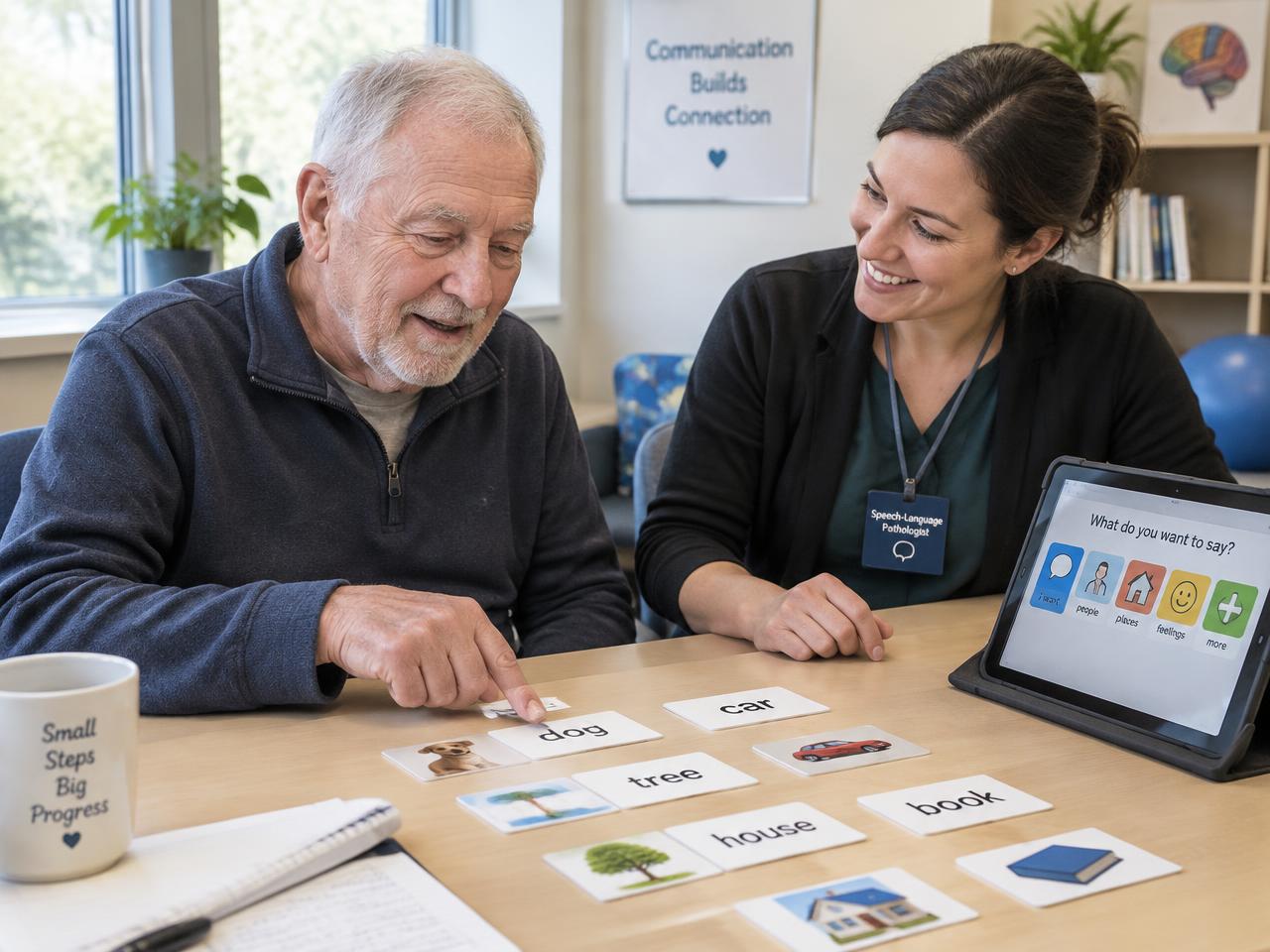
Speech Therapy After Stroke
Rehabilitation to rebuild communication and swallowing after a stroke.
Learn more
Aphasia Therapy
Help finding words, understanding and expressing language again.
Learn moreContact Us
Questions about an evaluation, scheduling, or insurance? Reach our Lutherville office by phone or send us a message.
Send a Message- 2324 W Joppa Road, Suite 130, Lutherville, MD 21093
- 443-875-7606
- amyschueler70@gmail.com
- Monday – Friday, 8:00 am – 6:00 pm