

Helping Adults Communicate, Think & Participate More Independently
Communication is connected to nearly everything we do.
We use it to make decisions with family, understand medical information, keep track of appointments, participate at work, maintain friendships, ask for help, and express our personalities. When speech, language, memory, cognition, voice, or swallowing abilities change, even familiar parts of daily life can suddenly require much more effort.
Spectrum Speech Therapy provides adult speech therapy for Pikesville, MD residents who are experiencing communication, cognitive, voice, or swallowing challenges.
Our speech-language pathologists work with adults and seniors whose needs may be related to stroke, brain injury, neurological conditions, medical changes, voice disorders, swallowing difficulties, or changes in cognitive-communication abilities.
Treatment is personalized around the individual rather than the diagnosis alone.
For one person, the priority may be finding words more easily during family conversations. For another, it may be speaking clearly enough to use the telephone independently. Someone else may need strategies for memory and organization after a neurological event.
The goal is to make therapy relevant to the situations that matter in everyday life.
If you are searching for an adult speech therapist near Pikesville, Maryland, learn more about Spectrum Speech Therapy's adult services or contact us to request an evaluation.
Why Adults May Need Speech Therapy
Speech therapy is sometimes thought of primarily as a service for children. In reality, speech-language pathologists also provide specialized evaluation and treatment for adults across the lifespan.
Adult communication abilities can change for many reasons.
Some difficulties begin suddenly after a medical event such as a stroke or traumatic brain injury. Others develop gradually due to a neurological condition. Voice and swallowing concerns can also occur independently of a neurological diagnosis.
An adult speech-language evaluation may be appropriate when you notice changes such as:
A comprehensive evaluation helps identify the specific areas affected and guides recommendations for treatment.
Explore all services available through Spectrum Speech Therapy for additional information.

Maintaining Independence Through Functional Communication
For many adults, the most important reason to pursue speech therapy is not simply to perform better on a test. It is to become more successful and independent in everyday situations.
Communication difficulties may interfere with tasks such as:
- Scheduling an appointment
- Speaking with a doctor
- Understanding medication instructions
- Managing a calendar
- Making a telephone call
- Following a conversation in a group
- Reading mail or email
- Ordering at a restaurant
- Completing work responsibilities
- Remembering important information
- Explaining a problem
- Participating in family decisions
- Managing household tasks
- Communicating in the community
Adult speech therapy can incorporate these real-life activities into treatment.
Instead of treating communication as an isolated skill, therapy can focus on practical strategies that help clients participate more confidently in the routines and relationships that are important to them.
Stroke Speech Therapy for Pikesville-Area Adults
A stroke can affect communication in several different ways.
Some stroke survivors experience difficulty using or understanding language. Others know what they want to say but have trouble producing speech clearly. A stroke can also affect memory, attention, executive functioning, reading, writing, and swallowing.
Because stroke symptoms vary, speech therapy after a stroke should be based on an individual's specific needs.
Treatment may address:
- Aphasia
- Dysarthria
- Apraxia of speech
- Word retrieval
- Language comprehension
- Reading and writing
- Speech clarity
- Cognitive-communication skills
- Attention
- Memory
- Problem-solving
- Executive functioning
- Swallowing difficulties
Goals may also evolve during recovery.
Someone may initially need help communicating basic wants and needs. Later, that same person may want to participate more fully in family conversations, independently schedule appointments, resume hobbies, or return to professional responsibilities.
Spectrum Speech Therapy provides stroke speech therapy for Pikesville, MD residents from our nearby Lutherville office as well as through telehealth when appropriate.
Aphasia Therapy Near Pikesville, MD
Aphasia is a language disorder that commonly occurs after damage to language areas of the brain.
It can affect the ability to speak, understand spoken language, read, or write.
An adult with aphasia may pause frequently because a familiar word will not come to mind. Another person may speak easily but have difficulty understanding what other people are saying. Some individuals have particular difficulty reading written information or composing messages.
Aphasia does not affect everyone in the same way.
Therapy may focus on:
- Retrieving words
- Naming people and objects
- Building sentences
- Answering questions
- Understanding spoken information
- Participating in conversation
- Reading comprehension
- Writing
- Using gestures or visual supports
- Developing compensatory communication strategies
Functional communication remains an important part of treatment.
A person might practice discussing familiar subjects, making requests, participating in healthcare conversations, communicating by telephone, reading important documents, or using strategies when a word cannot be retrieved.
Families can also benefit from communication education so conversations at home become more supportive and productive.
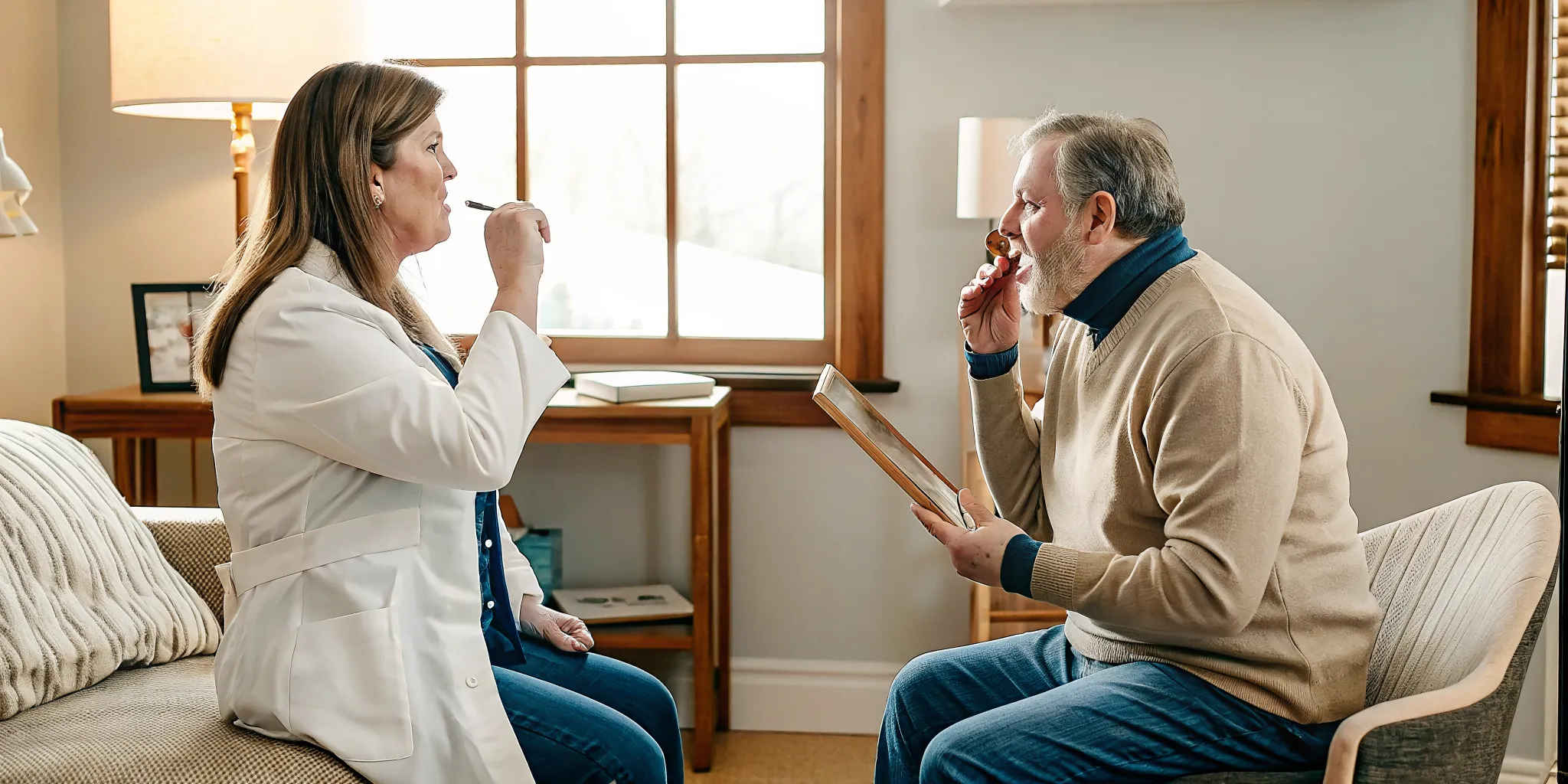
Cognitive-Communication & Memory Therapy Near Pikesville
Communication requires much more than vocabulary and speech.
We rely on attention to follow conversations, memory to retain information, executive functioning to organize ideas, and problem-solving to respond to unexpected situations.
When these cognitive abilities change, an adult may have significant difficulty with everyday life even if their speech sounds completely normal.
Cognitive-communication problems may appear as:
- Forgetting appointments or commitments
- Repeating questions
- Losing track of conversations
- Difficulty organizing information
- Trouble planning daily activities
- Difficulty managing multiple responsibilities
- Reduced attention in distracting environments
- Trouble following lengthy instructions
- Forgetting information from meetings
- Difficulty prioritizing tasks
- Becoming overwhelmed by complex activities
- Trouble remembering names or details
- Difficulty completing tasks in the correct sequence
Cognitive-communication therapy for Pikesville adults may combine direct skill-building with practical compensatory strategies.
Tools can include:
- Calendars
- Written schedules
- Smartphone reminders
- Checklists
- Note-taking systems
- Visual supports
- Organizational routines
- Environmental modifications
- Repetition strategies
- Planning frameworks
The specific tools used should match the client's needs and lifestyle.
A strategy that works well for a retired adult managing household responsibilities may be very different from the strategy needed by someone preparing to return to a busy workplace.
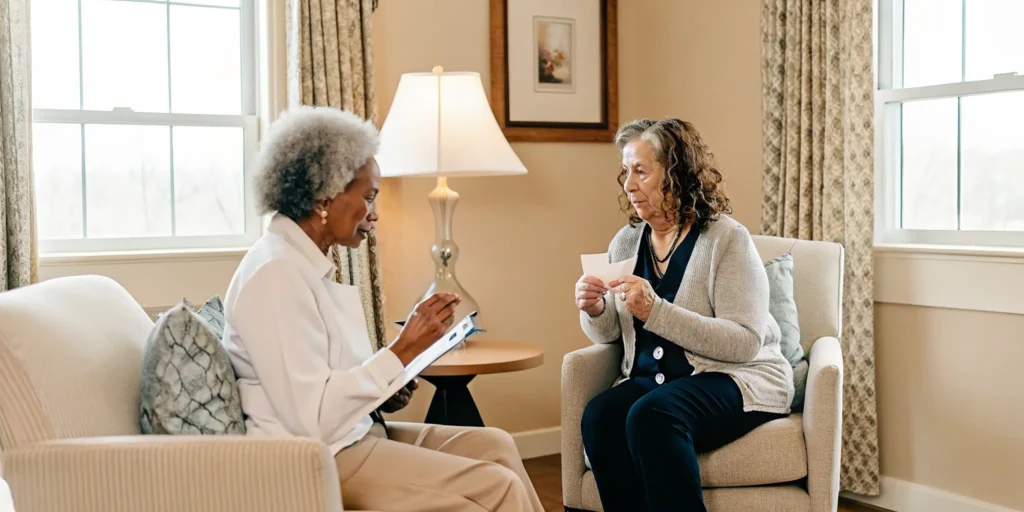
Speech Therapy After Traumatic Brain Injury
Communication and thinking difficulties after a traumatic brain injury can sometimes be difficult for other people to recognize.
An individual may look physically recovered while continuing to struggle with mental fatigue, concentration, memory, organization, or communication.
Common cognitive-communication difficulties following brain injury can include problems with:
- Sustaining attention
- Processing information
- Remembering details
- Organizing thoughts
- Word retrieval
- Planning
- Reasoning
- Social communication
- Following conversations
- Completing multi-step tasks
- Managing work responsibilities
Speech-language therapy can help identify which skills are creating barriers and develop strategies for handling those challenges more effectively.
For some adults, treatment may focus heavily on returning to employment or school. For others, priorities may involve household responsibilities, family communication, medical management, or community participation.
Improving Speech Clarity With Dysarthria Therapy
Dysarthria is a motor speech disorder that can occur when neurological changes affect the strength, coordination, speed, or control of the muscles used for speech.
A person's speech may sound:
- Slurred
- Quiet
- Slow
- Weak
- Monotone
- Imprecise
- Difficult to understand
This can create frustration when other people frequently ask the speaker to repeat themselves.
Treatment for dysarthria may address areas such as articulation, speaking rate, vocal volume, breath support, pacing, and strategies for making speech easier for communication partners to understand.
The objective is not merely to make isolated sounds more accurately. Treatment can focus on helping the person communicate successfully in situations that matter, including conversations at home, phone calls, medical appointments, social activities, and work.
Apraxia of Speech Therapy for Adults
Apraxia of speech affects the brain's ability to plan and sequence the movements necessary for speech.
The muscles themselves may be capable of moving normally, but coordinating those movements into accurate speech can be difficult.
An adult with apraxia may:
- Struggle to begin a word
- Produce inconsistent sound errors
- Need repeated attempts to say something
- Speak slowly while carefully forming sounds
- Find longer words or sentences particularly difficult
Treatment can include structured practice with sounds, words, phrases, and functional communication while also teaching strategies the individual can use outside therapy.
Because apraxia and aphasia can occur together, an evaluation helps determine which communication processes have been affected.
Voice Therapy for Adults Near Pikesville
A voice that becomes weak, strained, hoarse, or easily fatigued can affect far more than sound quality.
Someone who talks throughout the workday may begin avoiding conversations because speaking requires too much effort. Another person may find that family members have difficulty hearing them. Persistent vocal changes can also affect confidence in social situations.
Voice therapy may be appropriate for concerns involving:
- Hoarseness
- Vocal fatigue
- Reduced vocal strength
- Voice strain
- Changes in vocal quality
- Difficulty projecting
- Excessive effort while speaking
Depending on the individual's needs, therapy may address breathing, vocal efficiency, healthy voice use, resonance, and strategies for reducing unnecessary strain.
Adults searching for voice therapy near Pikesville, MD can contact Spectrum Speech Therapy to discuss evaluation and treatment options.
Swallowing Therapy & Dysphagia Care
Speech-language pathologists are also trained to work with swallowing disorders.
Difficulty swallowing is known as dysphagia and can occur after stroke, neurological disease, surgery, illness, injury, or other medical changes.
Signs that may warrant further evaluation include:
- Coughing during meals
- Choking while eating or drinking
- Difficulty swallowing pills
- Food or liquid feeling stuck
- Taking an unusually long time to eat
- Avoiding certain foods because they are difficult to swallow
- Increased effort when chewing
- Changes in voice quality after swallowing
Swallowing treatment depends on the individual's condition and evaluation findings.
Recommendations may involve therapeutic exercises, compensatory strategies, positioning, changes to eating routines, and client or caregiver education.
If you are concerned about swallowing or dysphagia near Pikesville, Maryland, contact the practice to determine the appropriate next step.
Adult Speech Therapy for Progressive Neurological Conditions
Some communication challenges do not follow a single event such as a stroke. Instead, speech, cognition, voice, or swallowing may change gradually because of a progressive neurological condition.
Speech therapy can help adults develop strategies for maintaining communication and participation as effectively as possible.
Treatment priorities may include:
- Maintaining speech clarity
- Supporting vocal loudness
- Developing communication strategies
- Creating memory supports
- Simplifying complicated routines
- Educating family members
- Addressing swallowing concerns
- Planning for future communication needs
Early evaluation can also provide a useful baseline for understanding current abilities and monitoring changes over time.
Therapy should remain responsive to the person's priorities, abilities, support system, and stage of life.
Supporting Adults & Seniors in the Pikesville Area
Adult speech-language pathology is relevant across a wide age range.
Some clients are working professionals recovering from neurological injuries. Others are retirees who want to remain as independent and socially active as possible. Seniors may be managing several medical changes at once while family members become increasingly involved in care.
Spectrum Speech Therapy serves both adult and geriatric populations and develops treatment around the individual rather than making assumptions based on age.
Family members and caregivers may be included when appropriate.
They can learn ways to:
- Support conversation
- Provide useful cues
- Organize information
- Reinforce strategies at home
- Reduce communication breakdowns
- Support safer routines
- Encourage independence without taking over tasks unnecessarily
The goal is to create strategies that work not only during therapy but also within the person's real support system.
A Personalized Approach to Adult Speech Therapy
Two people can have the same diagnosis and still require very different therapy.
Consider two adults recovering from stroke.
One may be retired and most concerned about participating in family conversations and reading for pleasure. Another may be preparing to return to an office where they need to lead meetings, manage email, organize projects, and communicate with clients.
Their diagnosis may be similar, but their treatment priorities are not.
Spectrum Speech Therapy uses individualized evaluation and treatment planning so therapy can reflect each client's:
- Communication strengths
- Areas of difficulty
- Medical history
- Daily routines
- Work demands
- Family responsibilities
- Social activities
- Personal priorities
Treatment can then focus on meaningful progress rather than generic exercises alone.
Adult Speech Therapy Serving Pikesville & Nearby Baltimore County Communities
Spectrum Speech Therapy's office is located at Greenspring Station in Lutherville:
Spectrum Speech Therapy
2324 W Joppa Road, Suite 130
Lutherville, MD 21093
Phone: 443-875-7606
The practice serves Pikesville residents as well as adults and families from communities throughout the Baltimore area.
Nearby communities may include:
Both in-person and telehealth services are available.
Why Choose Spectrum Speech Therapy Near Pikesville?
Choosing a speech-language pathologist is an important decision, especially when communication challenges follow a major medical event or begin affecting a person's independence.
Spectrum Speech Therapy provides adult and geriatric care with an emphasis on personalized, evidence-based treatment and practical communication goals.
Pikesville-area adults can benefit from:
You can also read Spectrum Speech Therapy testimonials or review our Speech Therapy FAQ.
Frequently Asked Questions About Adult Speech Therapy in Pikesville, MD
Does Spectrum Speech Therapy work with adults from Pikesville?
Yes. Spectrum Speech Therapy serves adults and seniors from Pikesville and surrounding Baltimore County communities. In-person appointments are available at the Lutherville office at Greenspring Station, and telehealth is also available.
Is there a Spectrum Speech Therapy office in Pikesville?
Spectrum Speech Therapy's physical office is located at 2324 W Joppa Road, Suite 130 in Lutherville, MD. The practice serves Pikesville residents from this location and through telehealth.
What conditions does adult speech therapy address?
Adult speech-language therapy may address aphasia, apraxia of speech, dysarthria, cognitive-communication disorders, memory and attention difficulties, voice disorders, swallowing disorders, and other speech or language concerns.
Can speech therapy improve communication after a stroke?
Speech therapy may be an important part of rehabilitation when a stroke affects language, speech production, cognition, or swallowing. Treatment is customized according to the abilities affected and the person's functional goals.
Can an adult speech therapist help with word-finding problems?
Yes. Word retrieval difficulties can occur with aphasia and other communication disorders. Treatment may include structured word-retrieval practice as well as strategies the person can use during everyday conversations.
Do speech-language pathologists work on memory?
Yes. Speech-language pathologists treat cognitive-communication difficulties involving memory, attention, organization, problem-solving, and executive functioning when those abilities affect communication and daily functioning.
Can speech therapy help someone return to work?
When communication or cognitive difficulties affect employment, therapy can incorporate job-related skills such as organizing information, participating in conversations or meetings, remembering instructions, managing schedules, and using compensatory strategies.
Does Spectrum Speech Therapy work with seniors?
Yes. Spectrum Speech Therapy provides services for adult and geriatric populations. Therapy can address communication, cognition, voice, speech, and swallowing needs based on the individual's abilities and goals.
What are common signs of a swallowing problem?
Possible signs include coughing or choking during meals, trouble swallowing pills, food feeling stuck, increased effort while chewing or swallowing, and avoiding foods because they have become difficult to manage. Swallowing concerns should be appropriately evaluated.
Is telehealth available for Pikesville residents?
Yes. Spectrum Speech Therapy provides telehealth appointments as well as in-person sessions. Contact the practice to determine whether virtual therapy is appropriate for your needs.
Should a family member attend adult speech therapy?
Family or caregiver participation may be useful depending on the person's communication needs and treatment goals. Family members can learn strategies for supporting communication and helping reinforce techniques outside therapy.
What happens during an adult speech therapy evaluation?
The speech-language pathologist gathers information about the person's concerns, medical history, current abilities, and functional needs. Specific communication, cognitive, voice, or swallowing skills may then be assessed to help determine treatment recommendations.
How do I schedule adult speech therapy near Pikesville?
Call Spectrum Speech Therapy at 443-875-7606 or use the online contact form to request an evaluation or ask questions about adult speech therapy.
Contact Us for Adult Speech Therapy Near Pikesville, MD
Changes in communication, memory, speech clarity, voice, or swallowing can affect independence as well as relationships, work, safety, and participation in everyday life.
If you or someone you care for is experiencing these changes, Spectrum Speech Therapy can help you better understand your options.
We provide personalized adult speech therapy for Pikesville, MD residents, including services for adults recovering from stroke or brain injury and individuals experiencing aphasia, motor speech disorders, cognitive-communication difficulties, voice changes, or swallowing concerns.
Spectrum Speech Therapy
2324 W Joppa Road, Suite 130
Lutherville, MD 21093
Phone: 443-875-7606
Ready to Take the Next Step?
Contact our office today to schedule an evaluation or ask any questions. We are here to help.